
Hydrogen Peroxide for Plants
“The Caveman’s Guide to Root Rescue & Ancient Oxygen Magic”
You might already have a bottle of hydrogen peroxide sitting in your kitchen cupboard, gathering dust next to the band-aids. You probably think it’s just for cleaning up a scraped knee. But I’ve seen this tiny molecule do something far more magical. I’ve watched it bring dead roots back to life, help stubborn seeds wake up, and clear away the slimy green algae that chokes your garden trays.
It’s not a fertilizer. It’s not a fertilizer. It’s an oxygen spark.
Think of it as the modern-day version of a lightning strike that fell into a pot of water. In this guide, I’ll show you how to use hydrogen peroxide for plants safely and effectively. No confusing chemistry jargon, just the ancient wisdom of oxygen mixed with the simple tools you already own. We’re going to fight root rot, clean your tools, and wake up your soil-without burning your plants or yourself.
The Legend of Captain HP and the Iron Giants
Before I tell you how to use this bottle, you need to know where it came from. Long before I knew how to carve stone, the Earth was a wild, watery place. The oceans were ruled by “Iron Giants”-massive amounts of dissolved iron.
Enter Captain Hydrogen Peroxide (H₂O₂). He was a tiny hero, a spark of life. His mission? To bring oxygen to the deep, dark ocean so life could wake up. But the Iron Giants were everywhere. They were hungry. Every time Captain HP tried to shine his oxygen light, the Iron Giants would rush in and swallow him whole. This was the Fenton Reaction-a chemical battle where the iron destroyed the oxygen instantly.
For millions of years, the Earth stayed dark. The Iron Giants were actually protecting the fragile early life from too much oxygen too soon. It was a balance.
Fast forward to today. The Iron Giants have mostly rusted away, turning into the red rocks we see in deserts. The ocean is safe for oxygen. But now, your houseplants face a new problem: suffocation. When soil gets soggy, the roots can’t breathe. They rot.
That’s where your bottle of hydrogen peroxide comes in. It’s the Captain’s spark again, ready to fight the rot and fill your soil with air. But like the ancient oceans, it must be used with respect. Too much, and you burn the roots. Too little, and it does nothing.
The Caveman’s Wisdom: “Oxygen is life. But fire burns. Use the spark wisely.”
Bringing the Spark Home: How H₂O₂ Works in Your Garden
The Chemistry of the "Magic Bubbles"
When you pour hydrogen peroxide (H₂O₂) onto soil or water, it breaks down. It’s unstable, so it wants to return to normal water (H₂O). In doing so, it releases oxygen gas (O₂).
Those tiny bubbles you see fizzing in the soil? That’s the Captain working.
- Oxygen Boost: It fills the air pockets in compacted soil, helping roots breathe.
- Oxidation: It attacks the cell membranes of bad guys-fungi, bacteria, mold, and algae-without leaving a toxic residue. It literally dissolves their walls.
H₂O vs. H₂O₂: Why Water Alone Isn’t Enough
Water (H₂O) hydrates. It’s stable. It’s life. Hydrogen Peroxide (H₂O₂) is water with a “spark” attached. It’s a reactive oxidizer.
- Don’t treat it like fertilizer. It gives no nitrogen or phosphorus.
- Don’t use it undiluted. It will burn roots and kill the good bugs in your soil.
Common Concentrations: Stick to the 3%
You’ll see 3% (drugstore), 6% (horticulture), and even 35% (food-grade).
- The Golden Rule: Stick to 3% for 99% of your garden needs. It’s the safest, easiest to dilute.
- Avoid 35%: Unless you are a scientist with a lab coat, don’t touch it. It’s dangerous and can kill your plants instantly if you slip up.
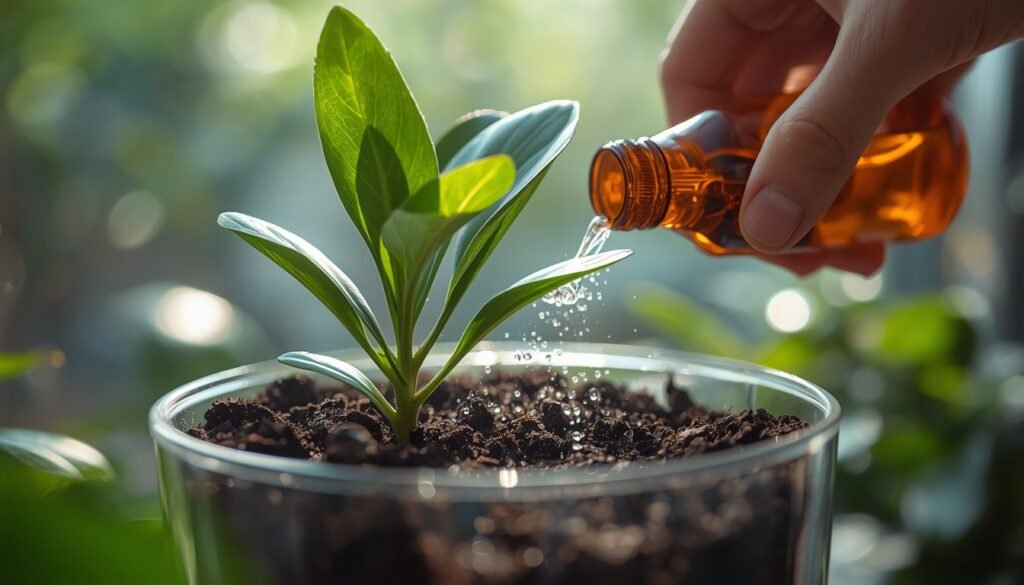
The Caveman’s Guide to Safe Dosage & Mixing
Here is the secret recipe. I’ve tested these ratios on my own “cave” garden (my backyard) for years.
1. The Seed Soak (Waking Up the Sleepers)
Seeds often carry dormant fungi. A quick dip wakes them up and kills the bad stuff.
- Mix: 1 part 3% H₂O₂ to 10 parts water.
- Time: Soak seeds for 5–10 minutes.
- Do: Rinse with plain water, then plant.
2. The Root Drench (Rescuing the Drowned)
Your plant’s leaves are yellowing? The soil smells sour? It’s root rot.
- Mix: 1 part 3% H₂O₂ to 4 parts water (roughly a 0.6% solution).
- Apply: Pour slowly at the base of the plant until it drains.
- Frequency: Repeat every 7–14 days until the plant recovers.
3. The Algae Spray (Clearing the Green Slime)
Green fuzz on top of your soil? That’s algae stealing nutrients.
- Mix: 1 part 3% H₂O₂ to 2 parts water.
- Apply: Spray directly on the surface on a sunny day. The bubbles will lift the algae.
Safety First: Wear gloves. H₂O₂ can irritate skin. Keep it away from children. Store in a cool, dark place (light kills it).
Household Hacks: Cleaning Tools & Compost Care
The Captain isn’t just for plants. He’s a guardian for your whole garden shed.
Disinfecting Pots and Tools
Before you plant, you must kill the old enemies.
- The Mix: 1 part 3% H₂O₂ to 1 part water.
- The Action: Soak plastic pots for 10 minutes. Wipe metal tools with a cloth soaked in the mix.
- Why: It kills stubborn spores without the harsh smell of bleach.
Treating Compost and Soil
If your compost pile smells bad, it’s anaerobic (no oxygen).
- The Fix: Add a tiny splash of diluted H₂O₂ to the top layer. It adds oxygen back in, stopping the sour smell and helping the good bacteria work again.
Have you tried to heal the plants with compost? Check The compost Alchemist in Vol.4. And the compost is not working as expected, come back here. If you are new to compost, here is the beginners guide: Home composting Guide for Beginners in Vol. 1
Troubleshooting: When the Spark Goes Wrong
Even with the best intentions, mistakes happen. Here is how to fix them.
Signs of “Burn”:
- Brown, crispy leaf tips.
- Wilting immediately after treatment.
- Soil turning white (salt buildup).
The Cure:
- Stop all peroxide use immediately.
- Flush the soil with plenty of plain water to wash out the excess.
- Wait a week before trying again with a weaker mix.
Is Food-Grade Peroxide (35%) Safe? No. I repeat: No. It is too strong. If you have 35%, do not use it on plants unless you have precise lab equipment and safety gear. Stick to the 3% bottle from the pharmacy. It’s safer and works just as well.
❓ Frequently Asked Questions (FAQ)
Before you grab that bottle and start spraying, let’s clear up some common doubts. I’ve seen too many good plants get burned by well-meaning but confused gardeners. Here is the truth about using hydrogen peroxide.
Q: Can I use hydrogen peroxide on all types of plants?
A: Yes, but with caution. It is a powerful tool best reserved for plants struggling with root rot, fungal issues, or algae. Using it on perfectly healthy plants every day can strip away the beneficial microbes in your soil that your plants actually love. Think of it as medicine, not food. Use it only when your plant needs it.
Q: Is food-grade hydrogen peroxide (35%) safe for gardening?
A: Absolutely not. Please, do not use it. The 35% concentration is an industrial-strength chemical that can cause severe burns to your skin and instantly kill your plants if even slightly miscalculated. Stick to the 3% solution found in any pharmacy. It is safe, effective, and designed for home use.
Q: How often should I apply hydrogen peroxide?
A: For treating root rot, apply a diluted solution every 7 to 14 days until you see new growth and the plant recovers. Once the plant is healthy, stop using it. There is no need for a daily dose. Overuse can harm the soil ecosystem and damage root tips.
Q: Will hydrogen peroxide kill the “good” bacteria in my soil?
A: It can, if you use it too often or too strong. At the correct dilution (1 part 3% peroxide to 4–10 parts water), the effect is short-lived. It releases oxygen and kills surface pathogens, then breaks down into water. The beneficial bacteria deep in the soil usually survive. However, frequent high-dose treatments will wipe them out. Balance is key.
Q: What should I do if I accidentally burn my plant with peroxide?
A: Stop immediately. If you see brown, crispy leaf tips or sudden wilting, the concentration was too high. Flush the soil with plenty of plain water to wash out the excess chemical. Let the plant rest without any treatment for at least a week. If the roots are still alive, the plant will recover.
The Final Word: Respect the Balance
Hydrogen peroxide is a tool, not a magic wand. It’s a temporary spark to wake up your roots, not a permanent food source. Like the ancient Iron Giants, the soil has its own balance. Use the Captain wisely, and your plants will thank you with strong roots and vibrant leaves.
Now, go mix your potion. And remember: dilute, don’t drown.
🛒 The Caveman’s Toolkit: Essential Items for Your Garden
Note: These items are selected to help you use Hydrogen Peroxide safely and effectively.
Disclosure: Some links below are affiliate links – I earn a small commission if you purchase, at no extra cost to you. I only recommend products I’ve personally used.
Read our full affiliate disclosure here.
| Product | Why You Need It | Buy It From |
|---|---|---|
| 3% Hydrogen Peroxide (32 oz) | The Hero. The standard, safe concentration for all your garden needs. | Buy Now |
| Amber Glass Spray Bottles (Set of 2) | The Vessel. H₂O₂ breaks down in light. Amber glass keeps your “spark” potent. | Buy Now |
| Precision Liquid Dropper (5ml) | The Measurer. For getting exact dilutions for seed soaking. | Buy Now |
| Nitrile Gloves (Box of 100) | The Armor. Protect your hands from irritation and accidental splashes. | Buy Now |
| Safety Goggles | The Eye Shield. Essential when mixing larger batches or cleaning tools. | Buy Now |
| Plastic Mixing Cups | The Cauldron. Disposable or reusable cups for mixing your solutions. | Buy Now |
| Garden Trowel | The Shovel. For applying the drench to the base of plants. | Buy Now |
| Potting Soil (Organic Mix) | The Home. Fresh, well-draining soil is the best partner for peroxide. | Buy Now |
| Seed Starting Tray | The Cradle. Perfect for the seed soak method to prevent damping-off. | Buy Now |
| Plant Mist Sprayer (Fine Mist) | The Gentle Rain. For applying the algae spray without disturbing the soil. | Buy Now |