Home Composting Guide: Vol. 1
Turn Kitchen Waste Into Black Gold
"Nothing is waste. Everything returns."
Why Home Composting Matters: Rethinking Kitchen Waste
Every week, without fail, a massive truck rumbles down our street. It stops at each house, and we hand over bags filled with things we’ve decided we no longer need. Apple cores. Carrot peels. Coffee grounds. We call them “garbage.”
But one morning, standing at my kitchen window watching the truck disappear around the corner, I heard a voice…. rough, ancient, amused.
“You’re throwing away tomorrow’s food.”
I turned. There was no one there. But the voice persisted, echoing from somewhere deep in my DNA.
“We never had a word for ‘garbage.’ Everything returned. Everything fed the next season.”
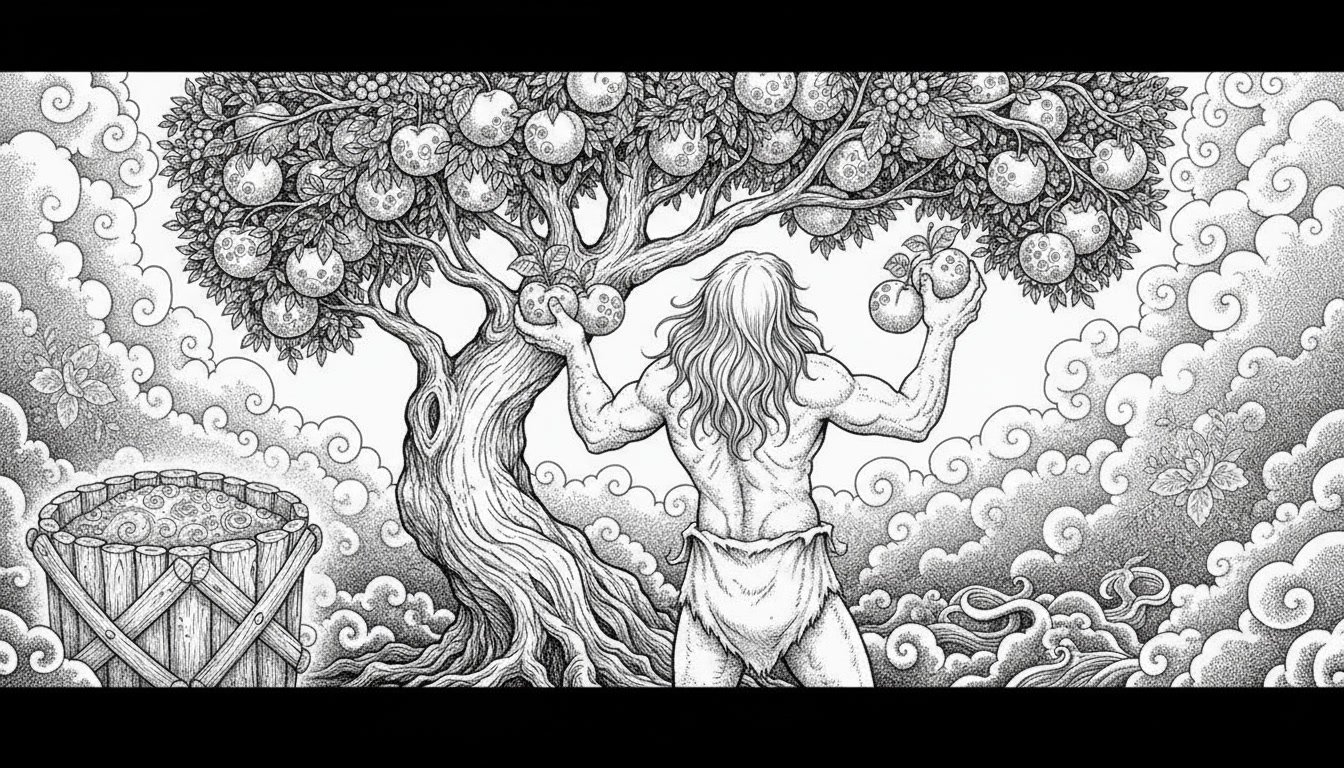
It was the voice of the CAVEMAN—not a primitive fool, but the original engineer of sustainability. The one who understood what we’ve forgotten.
What the Caveman Knew About Composting and Natural Cycles
CAVEMAN Says:
“You know, every week this big noisy truck comes to your house and takes away all sorts of things. Fruit peels, vegetable scraps—you call them ‘garbage,’ right? But wait… isn’t that kind of wasteful? Where I come from, we didn’t have ‘garbage.’ We buried all that stuff in the ground, and nature broke it down. By the next season, that same soil grew strong plants that became our precious food. We lived like that for thousands of years, everyone thriving together. But if you cut off that natural cycle… how are you supposed to survive? And what about all the other creatures who depend on it? If the beings who help us can’t eat, then tomorrow, neither can we.”
The CAVEMAN had no concept of waste. To him, every scrap of food was “a gift returning home”.
- Vegetable scraps
- Fruit peels
- Tea leaves and coffee grounds
- Eggshells and shrimp shells
All of it came from the earth. All of it “belonged back in the earth”. Insects devoured it. Microbes transformed it. Rich, dark humus emerged “the foundation of new life”. This cycle sustained humanity for over 10,000 years.
But we broke it…
We sealed organic matter in plastic bags, sent it to landfills, and wondered why our soil grew lifeless, our food tasteless, our bodies sick.
Indoor Composting Systems: Bringing Ancient Wisdom Home
CAVEMAN Says:
“I know, I know—people living in tall concrete buildings in the city are pretty far from the earth. That must be tough. But guess what? I found these amazing tools that let you do what we’ve been doing for tens of thousands of years… right inside your home! With these, you can turn ‘garbage’ into nutrient-rich soil. And with that soil, you can grow fresh vegetables indoors. Now I can feel safe eating vegetables I grew myself, absorbing nature’s gifts directly. I think my body’s going to feel a lot better.”
The Modern Miracle "Home Composting"
The CAVEMAN discovered something remarkable: home composting systems that bring the ancient cycle into modern apartments. These aren’t messy, smelly experiments. They’re elegant, efficient, and rooted in humanity’s oldest art: fermentation. Fermentation isn’t just about making wine or yogurt. It’s the original biotechnology—the partnership between humans and microbes that has sustained civilizations.
Modern home composting systems recreate this 10,000-year-old “composting cycle” in your kitchen:
- Electric composters: Transform scraps into soil in hours
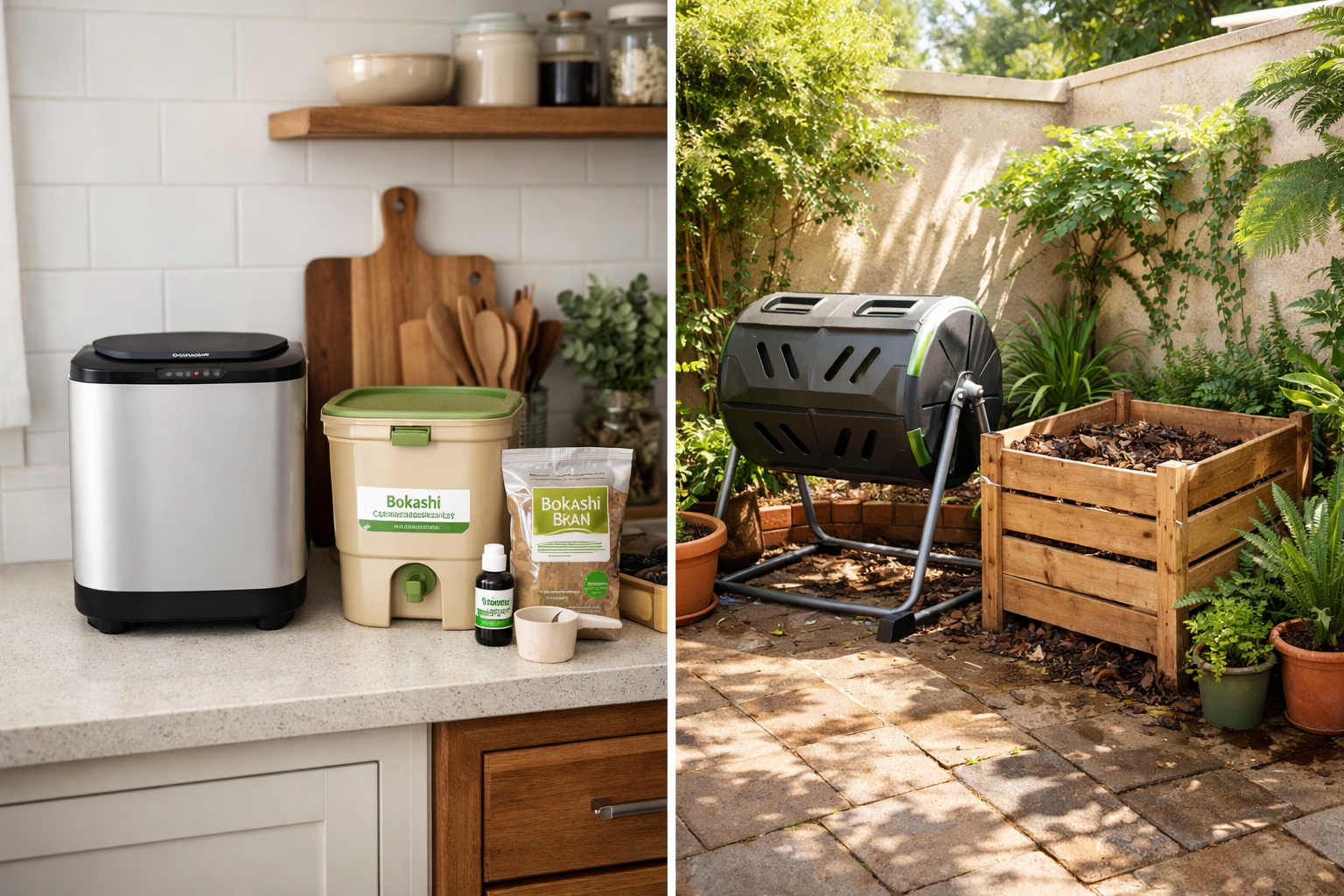
- Bokashi systems: Use fermentation instead of decomposition—no smell, no pests
- EM (Effective Microorganisms): A consortium of beneficial bacteria, yeast, and photosynthetic microbes
- Traditional bins: Simple, patient, connected to the earth’s rhythm
Why This Matters Beyond "Reducing Waste"
When you compost, you’re not just being eco-friendly. You’re reconnecting with the foundation of human existence.
You’re acknowledging that:
- Your body is made from soil
- Your food comes from soil
- Your waste returns to soil
- You are not separate from nature = you are nature
This awareness ripples outward:
- Biological rhythm restored: You become conscious of cycles–seasons, growth, decay, rebirth
- Lifestyle transformation: You question other “linear” habits (buy → use → discard)
- Physiological harmony: Eating food grown in your own compost reconnects you to nutrient cycles your ancestors knew
- Philosophical awakening: You realize nothing is waste–only misplaced resources
This was the CAVEMAN’s question to modern humanity: “If you sever the cycle that sustained us for 10,000 years, how long do you think you’ll last?”
Below, you’ll find the tools the Caveman discovered—modern instruments for an ancient practice.
Start Your Home Composting Journey Today: Your Turn to Close the Loop
Caveman Recommends and Says: "These Tools Good! Modern Stuff for Old-School Digging."
home composting system
Disclosure: Some links below are affiliate links – I earn a small commission if you purchase, at no extra cost to you. I only recommend products I’ve personally used.
Read our full affiliate disclosure here.
For apartment dwellers:
For those with outdoor space:
“Electric Kitchen Composter” > “Reencle Prime”🔗 – Fast, odor-free, countertop-friendly.
Why I recommend it: It’s the only electric composter I’ve tested that doesn’t leave a greasy residue or smell. I earn commission – but I’d buy it even if I didn’t.
“Bokashi Bucket Starter Kit” > “Bokashi Living”🔗 – Ferments scraps without smell, works indoors.
No Official Store. Find from online shop or whoever has it in stock. It’s the same product everywhere.
“Tumbling Composter” > VIVOSUN Tumbler🔗 – Easy to turn, keeps pests out, speeds decomposition.
Why I recommend it: The dual-chamber design lets you compost continuously. I earn commission – but I’ve used this for 3 years.
More Info from VIVOSUN: Official Website
“Traditional Wooden Bin” > “Greenes Fence Bin”🔗 – Simple, sturdy, blends into gardens.
Why I recommend it: No plastic, no moving parts, lasts 10+ years. I earn commission – but I’d build one myself if I couldn’t buy this.
Microbial Allies
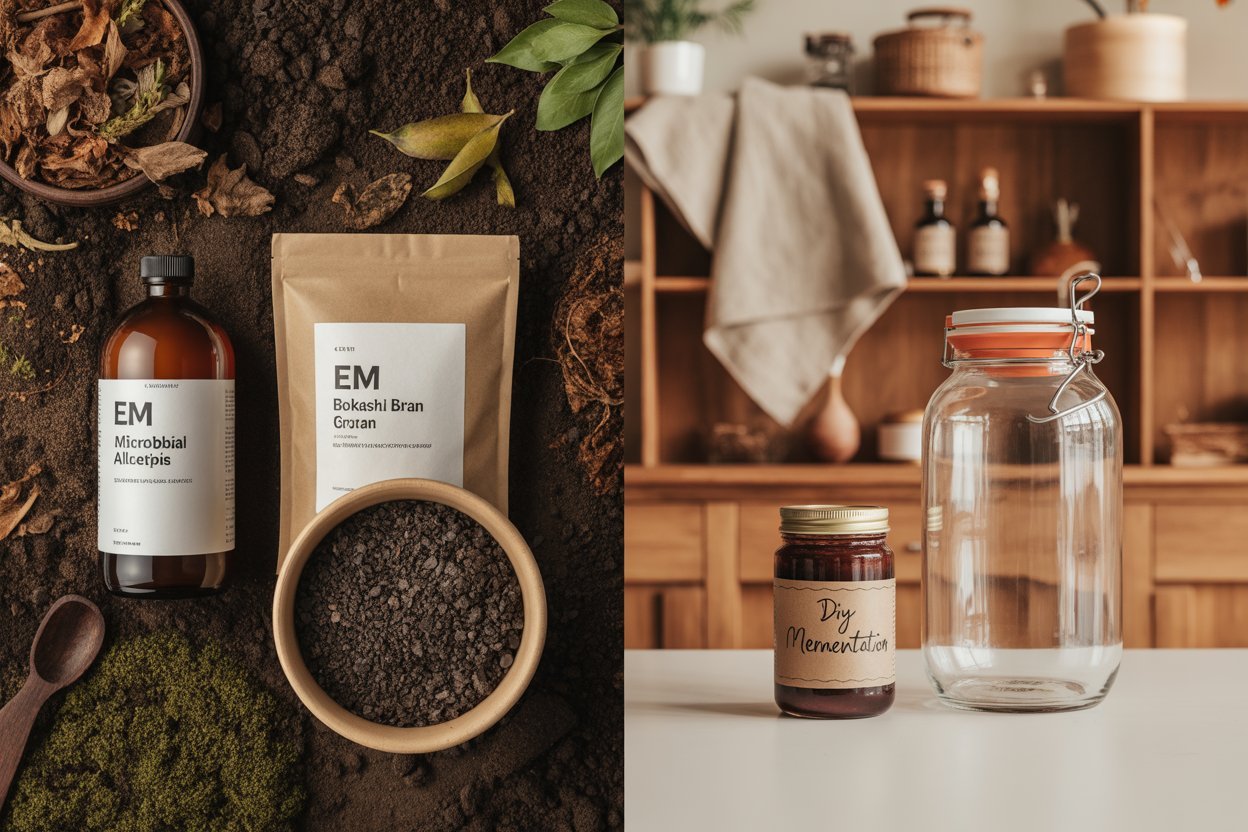
EM (Effective Microorganisms):
DIY Fermentation:
“EM-1 Concentrate” >”TeraGanix EM-1″🔗 – The original microbial inoculant.
Why I recommend it: It’s the gold standard. I earn commission – but I’ve tested cheaper alternatives. None work as well.
“EM Bokashi Bran” > “Bokashi Bran”🔗 – Ferments scraps before composting.
No official store. Find from online shop – multiple sellers, or buy locally if possible. Same product everywhere.
“Molasses for EM Activation” > “Blackstrap Molasses”🔗 – Feeds microbes.
Why I recommend it: It’s cheap, natural, and works. I earn commission – but I’d buy it anyway for baking and expresso coffee sweetner.
“Airtight Fermentation Jars” > “Kilner or Weck Jars”🔗 – No stink, no pests.
Why I recommend it: Glass is inert — no plastic leaching. I earn commission — but I’ve used these for 5+ years.
Learn the Ancient Art
The Rodale Book of Composting:
Teaming with Microbes:
“Let It Rot!”🔗 – The classic guide.
Why I recommend it: It’s comprehensive, practical, and still relevant. I earn commission – but I’ve owned this book and became bible since 2008.
“Teaming with Microbes”🔗 – Understanding soil biology.
Why I recommend it: It explains the invisible world beneath your bin. I earn commission – but I’ve gifted this book to 10 friends.
"Everything returned. Everything fed the next season."
"The CAVEMAN didn't have garbage trucks. He had partnership with the earth.
That partnership is still available to you.It starts with a single apple core." The Invisible World: “How to Befriend the Microbes That Run the World”
The CAVEMAN will introduce you to the trillions of collaborators you’ve been ignoring—and show you how to make them your partners in the cycle of life.
Stay Tuned…